"Iron Orchid" reviewed by An Earful
Bird, who first caught my ear on andPlay's wondrous Playlist, is obviously a deep thinker about sound, refusing to accept any limitations on what an instrument can do, in this case the piano…
Ning Yu & David Bird - Iron Orchid Yu's debut, 2020's Of Being was mightily impressive, but this album, a collaboration with composer David Bird, is a whole other animal. Bird, who first caught my ear on andPlay's wondrous Playlist, is obviously a deep thinker about sound, refusing to accept any limitations on what an instrument can do, in this case the piano, which is pushed to its limits as an object of wood and metal and plastic. Surrounding the sometimes startlingly heavy sonics generated by Yu are not only electronics but recordings collected from the Echo Chamber, an 11-foot tall sculpture created by Bird and Yu with Mark Reigelman that contains a speaker in each of its 56 metal tubes. That's all fascinating to know, but the overall experience of the album is of inventive, mind-expanding electroacoustic soundscapes, some spiky and herky-jerk, like a malfunctioning Terminator taking baby steps, others, like the staggering album-opener Garden, nearly overwhelming oceans of wall-shaking sound. I'm no audio elitist, but that latter quality is only fully realized on my good, old-fashioned component stereo. If there's one nearby, you owe it to yourself - and the dedicated team who made this extraordinary album - to play it there and at high volume.
http://anearful.blogspot.com/2021/09/record-and-concert-roundup-on-island.html#.YVX2fehKhPY
"Iron Orchid" reviewed by Sequenza 21
Composer and electronic musician David Bird’s work Iron Orchid enlists pianist Ning Yu as a collaborator. Bird’s electronics often provide steely sounds that accord both with the title and the inside the piano work that Yu does. In fact, the second word of the title plays a role in the piece as well, indicating the organic nature of its formal design.
Composer and electronic musician David Bird’s work Iron Orchid enlists pianist Ning Yu as a collaborator. Bird’s electronics often provide steely sounds that accord both with the title and the inside the piano work that Yu does. In fact, the second word of the title plays a role in the piece as well, indicating the organic nature of its formal design. So does the presence of live electronics against an acoustic piano, albeit one that has effects, microtones, and reverb as part of its palette. Thus in sections like “Iron,” reverb-hued electronics and string noise create thorny textures; an interesting coda involves a simple piano ostinato that is distressed with quarter tones and Bird unleashing plucking noises to a quasi-electronica beat.
The shape of Iron Orchid is somewhat hollowed out, with the outer movements of sizable duration while the central movements serve as aphoristic impressions. “Interlude” includes high sine tones throughout, with an atonal introduction followed by flowing ostinatos. “Prism” features a slow build from the electronics while foregrounded piano plays an angular and rising accelerando; Bird responds in kind with analog bleeps. “A Thin War of Metal” once again juxtaposes acerbic electronic textures with clusters and extended chords that give a nod to postmodern jazz. “Between Walls” returns the proceedings to inside the piano effects, this time against windswept electronics.
The final movement, “Petals,” brings together a number of non-metallic sounds to create a section that highlights the organic nature of Iron Orchid’s concept. A submarine klaxon opens the movement, followed by granular synth textures set against Yu playing reverberant single notes. A cello sample enters to create counterpoint against the piano, while a distorted series of electronic ostinatos push against the acoustic foreground. Yu takes up a mournful chord progression that banishes the most pointed electronic interjections, with bent notes, rumbling, and periodic percussive attacks creating an affecting coda. Iron Orchid is an engaging listen throughout. At a half hour long, it seems to cry out for a sequel to fill out a duo recital program. Here’s hoping.
https://www.sequenza21.com/2021/10/iron-orchid-cd-review/

"Iron Orchid" listed in "Best of Bandcamp Contemporary Classical"
“… Bird never settles for a single approach in his writing or in the application of electronics, yet the music never lacks cogency.”

https://daily.bandcamp.com/best-contemporary-classical/best-of-bandcamp-contemporary-classical-august-2021
“Pianist Ning Yu (Yarn/Wire) and composer David Bird originally created this music to be used as part of an interactive sound sculpture by Mark Reigelman in 2019, so it’s remarkable that it not only holds up on its own, but thrives as a piece of music. As the title suggests, the work revolves around the idea of metal, and in this context it sparkles, crashes, decays, and clangs. Bird’s electronics alternately seem to emanate from the acoustic patterns played by Yu, whether she’s playing dark left-handed clusters or scraping the strings inside of her instrument. Some of the electronic elements are objects inside of the piano, which generate odd harmonies with the keyboard. A series of shorter pieces reveal Yu’s artistry as a pianist, with electronic responses that alternate between shadowing and abstracting her playing, fighting against it, or finding harmony within it. Bird never settles for a single approach in his writing or in the application of electronics, yet the music never lacks cogency.”
"Iron Orchid" Music for Piano and Electronics Release (09/03/21)
Iron Orchid is an album-length electro-acoustic work for piano and electronics by New York composer David Bird in collaboration with pianist Ning Yu.
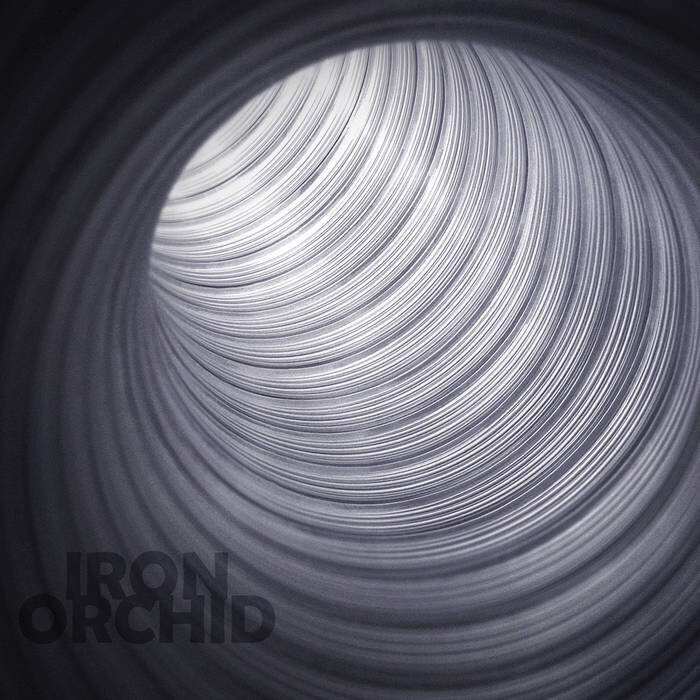
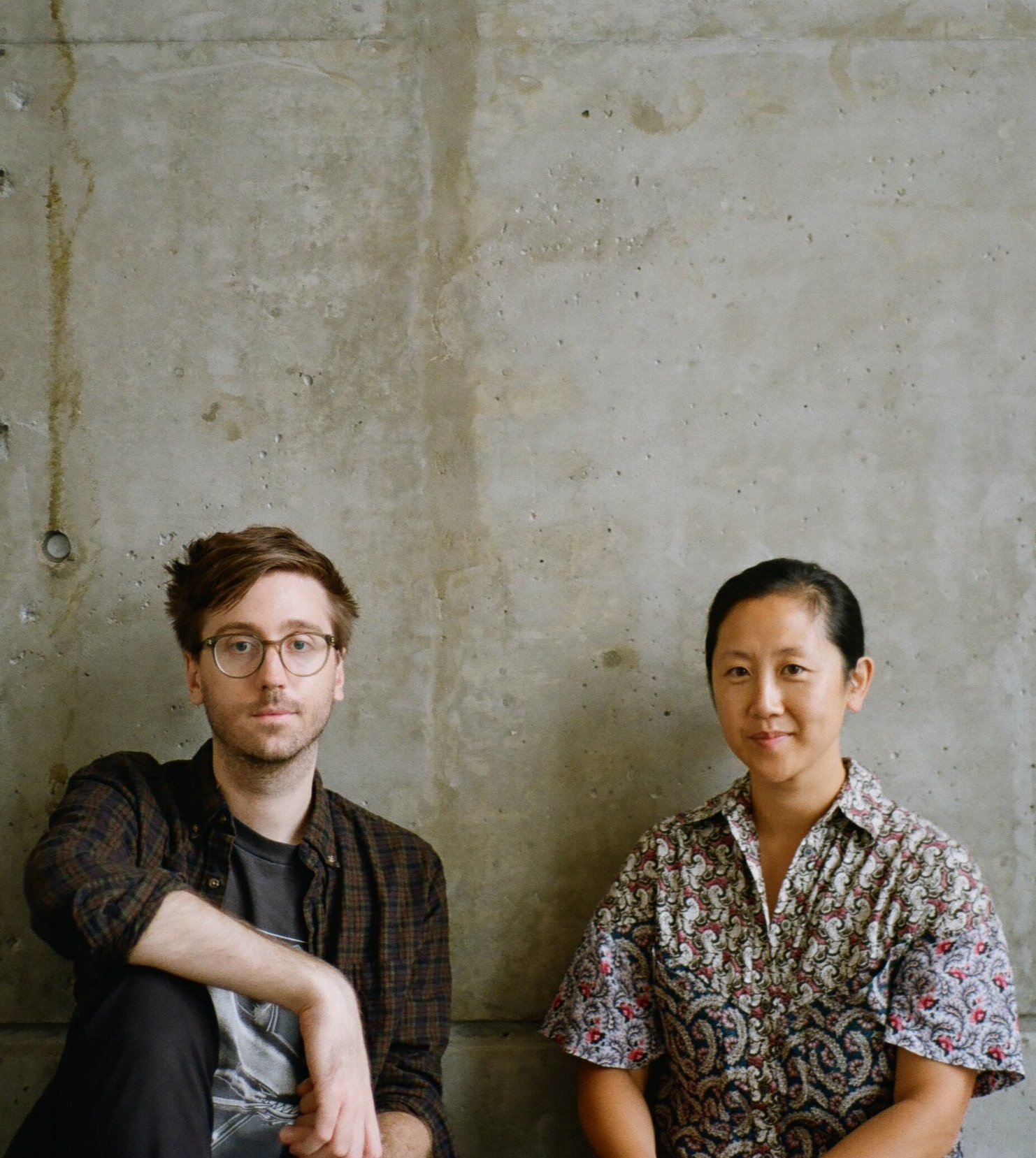
Iron Orchid is an album-length electro-acoustic work for piano and electronics by New York composer David Bird in collaboration with pianist Ning Yu. Iron Orchid builds on materials generated for the interactive sound sculpture Echo Chamber, an 11-foot metallic structure that Bird and Yu collaborated on with site-specific public artist Mark Reigelman II in 2019. Employing a wide range of techniques in dialogue with a constantly shifting electronic environment, Iron Orchid explores the relationship between human and computer-generated sounds, blurring the distinction between them with a catalog of inventive strategies, and creating a sound world in which the two become logical complements.
Album Link - https://www.newfocusrecordings.com/catalogue/ning-yu-iron-orchid/
Download Link - https://david-bird.bandcamp.com/album/iron-orchid
“What comes through with clarion intensity in Iron Orchid, a collaboration between composer & producer David Bird and pianist Ning Yu, is material. The through line is metal, but a transmogrified metal, embodied in timbres that shift and evolve in real time from the familiar to the surreal to the non-real. The metal of piano wires takes on a life of its own, as in “Iron,” where the rough scraping of piano strings lay atop a gorgeous pillow of sine tones. Despite the album’s considerable electronic element, Bird and Yu embrace the full timbral range of the piano as an acoustic instrument: from the crinkling tactility of fingers on wire; to resonant sotto voce melodies; to the murky and microtonal piano tremolos that comprise the dark but fecund soil of album opener “Garden.” Because these sounds feel like the genesis for Iron Orchid’s electronic components, the intermingling of piano and production is utterly fluid. Complex, faint overtones from a muted piano string are replicated by sine tones and echo off into nothingness; pitches crack and collapse unexpectedly; pulsing, stuttering synth sounds combine with the twisting, tortured scraping of wire.
Iron Orchid began in 2019, with the interactive multimedia sculpture “Echo Chamber,” a collaboration between Bird, Yu, and sculptor Mark Reigelman. The 11-foot-tall sculpture was constructed of stacks of 56 metal tubes, each with an audio speaker inside. Scattered materials from Echo Chamber are woven into the fabric of Iron Orchid, which could be thought of as a guided aural tour of the sculpture. The sculpture is simultaneously absent and yet omnipresent. Stasis and momentum evoke motion through an imaginary environment, one haunted by a foreign and unknown object freighted with immense mass, and operating under its own logic.”
– William Mason
Performed by Ning Yu
Composed and Produced by David Bird
Album Art by Mark Reigelman II
Engineered by Charles Mueller and Ryan Streber
Recorded at Oktaven Audio, Mt. Vernon, Ny
Album Liner Notes by William Mason
Mastered by Christopher Botta
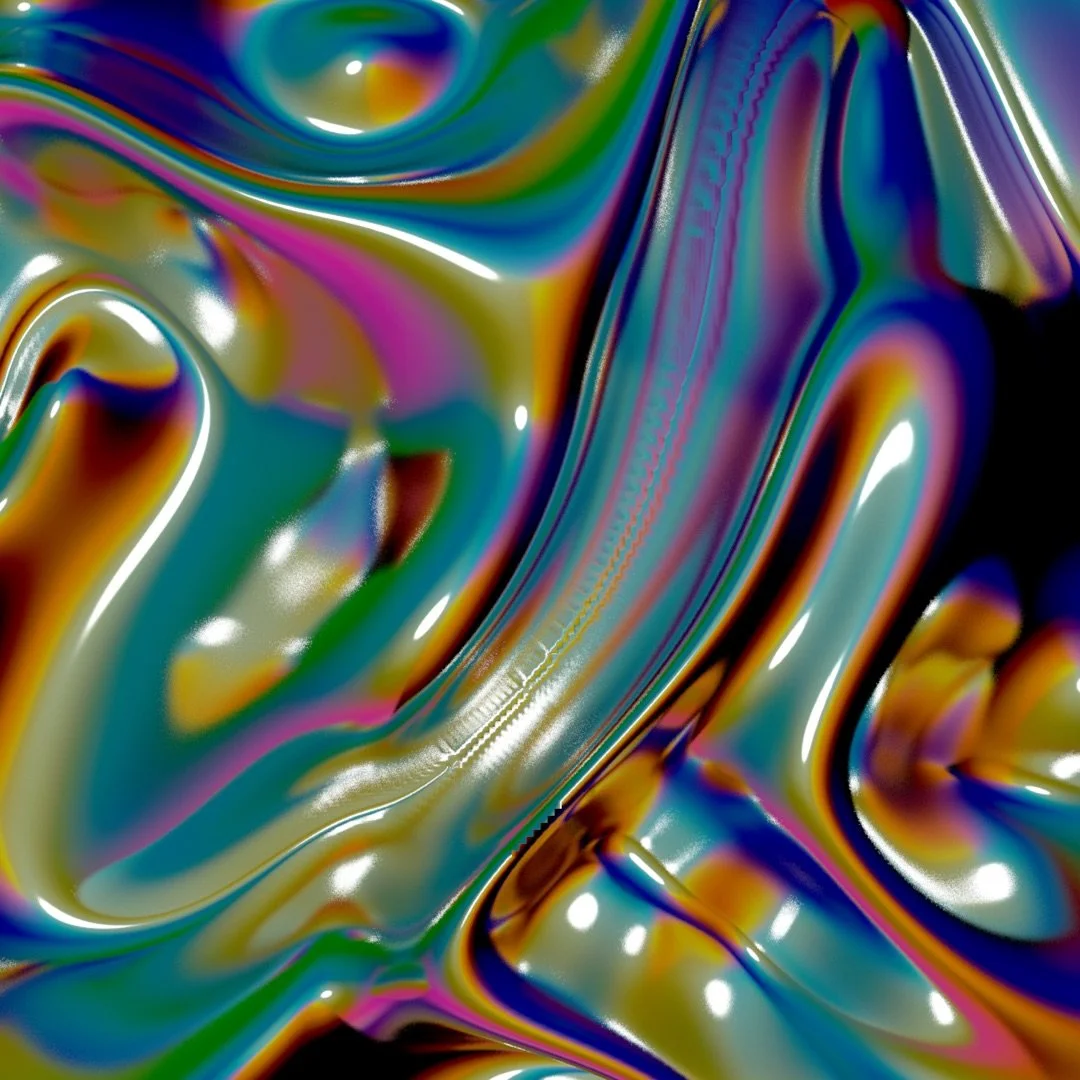
Exhibition featuring "Thresholds" in New York City
(this is not a) music video celebrates the diligent and difficult work that artists accomplished throughout the pandemic. Projects often years in the making were abruptly put on hold, canceled, and at best, re-imagined for a virtual universe.
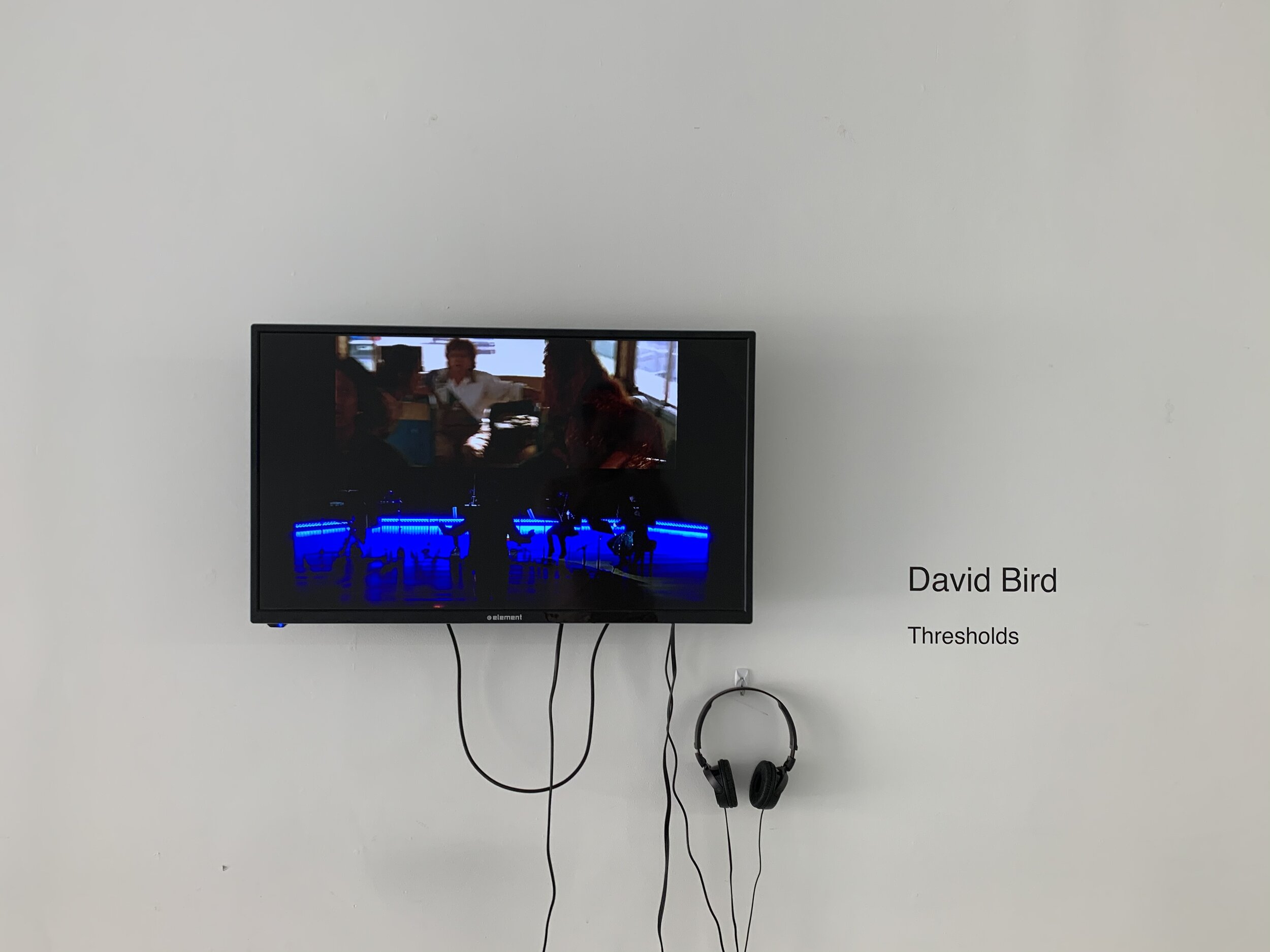
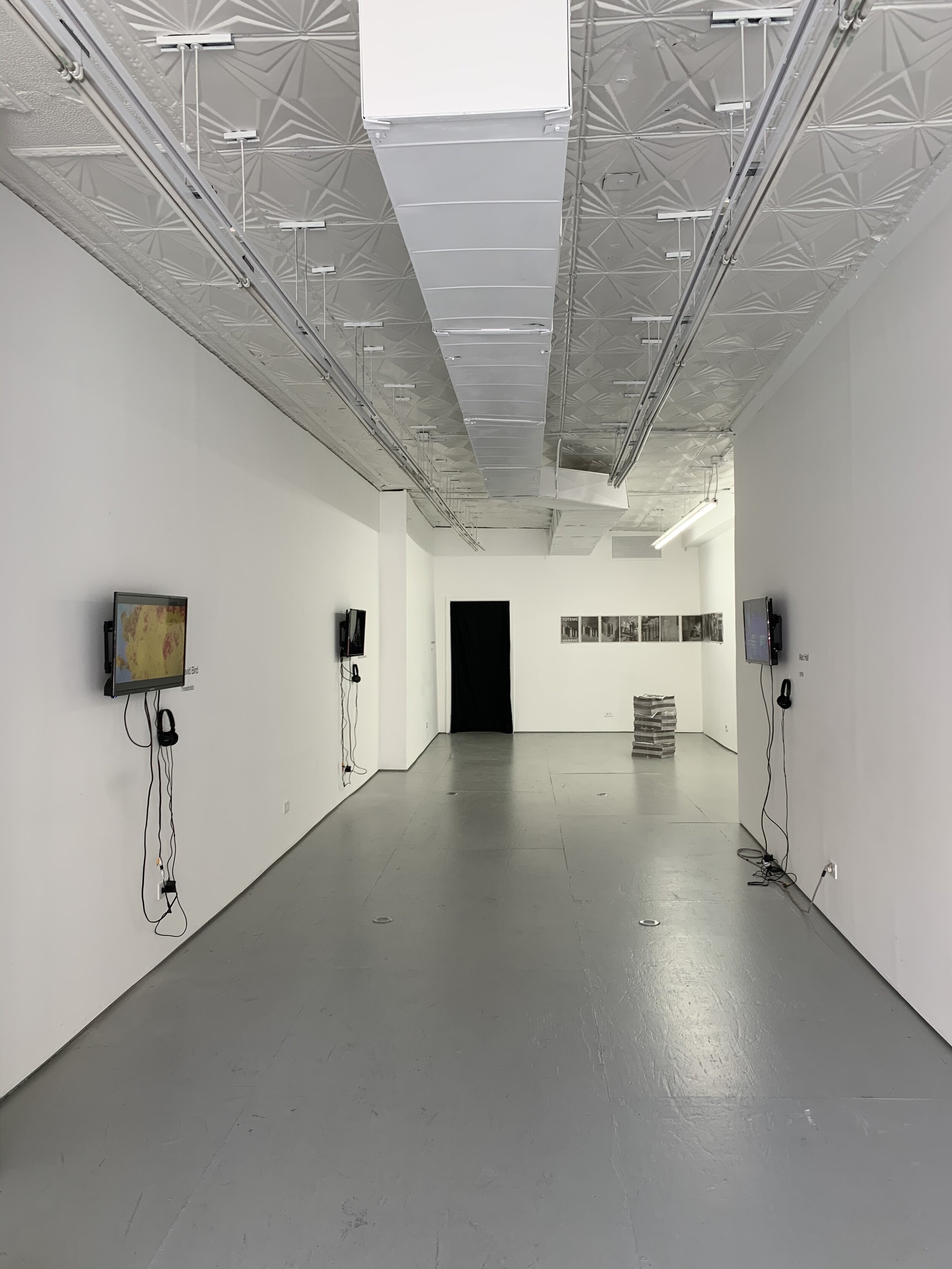
Performance of "Thresholds" by Ensemble Dal Niente included in New York exhibition "(this is not a) music video".
"Thresholds" uses Jan de Bont's 1994 action film "Speed" to explore themes of late-capitalism and climate catastrophe. Today, we are held hostage by the pursuit of economic security, increasingly working more grueling hours for fewer wages, with this process perpetuating the inevitability of climate catastrophe. Perhaps a comparison could be made with the process outlined above and the plot of "Speed," in which a domestic terrorist arms a city bus with an explosive programmed to detonate if the speed of the bus drops below 50 miles per hour. The explosive device forces the bus to drive faster and faster, holding on to the shallow hope of survival despite the inevitability of the vehicle running out of fuel.
(this is not a) music video celebrates the diligent and difficult work that artists accomplished throughout the pandemic. Projects often years in the making were abruptly put on hold, canceled, and at best, re-imagined for a virtual universe.

Premiere of "Tether" on Governors Island
From Out/With/In, a day-long experience where the psychological disorientation of the pandemic is applied to instrumental and environmental sound, deliriously blurring the lines between audience and performer, concert and installation, sound and space.


Premiere of "Tether" on Governors Island, 10/31/20. Performed by Ellery Trafford, Caitlin Cawley, Alex Alfaro, and David Bird.
“Tether” is written for four spatialized percussionists and was performed as part of Out/With/In, a day-long experience where the psychological disorientation of the pandemic is applied to instrumental and environmental sound, deliriously blurring the lines between audience and performer, concert and installation, sound and space.