Winner of Delirium Musicum's 2019 Call for Scores
David is a winner of Delirium Musicum's 2019 Call for Scores along with Anna Pidgorna, and Kai-Young Chan. The pieces of the winners of Delirium Musicum's 2019 Call for Scores will be performed by the ensemble on March 7th, 2020 at Boston Court Pasadena, in Los Angeles, CA.

David is a winner of Delirium Musicum's 2019 Call for Scores along with Anna Pidgorna, and Kai-Young Chan. The pieces of the winners of Delirium Musicum's 2019 Call for Scores will be performed by the ensemble on March 7th, 2020 at Boston Court Pasadena, in Los Angeles, CA.
More information available at: https://deliriummusicum.com/competition2019/
Apocrypha - Video Premiere on The Violin Channel
New York-based violin and viola duo, andPlay, performing the world premiere performance of David Bird’s 'Apocrypha' for solo violin and viola.
New York-based violin and viola duo, andPlay, performing the world premiere performance of David Bird’s 'Apocrypha' for solo violin and viola. Link to article

New York-based violin and viola duo, andPlay, performing the world premiere performance of American electroacoustic and mixed-media composer David Bird’s ‘Apocrypha’ for solo violin and viola.
“Apocrypha is loosely inspired by Stanislaw Lem’s 1961 novel ‘Solaris’ … Lem’s book follows a team of scientists stationed on a distant planet covered by a vast and gelatinous ocean …” David has told The Violin Channel.
“The novel depicts the way in which a planet is able to manipulate the emotions and memories of space travelers as they approach it, and I was interested in depicting the violin and viola as characters that slowly, and almost unknowingly, enter some kind of turbulent emotional orbit and then depart from it ….” he has said.
“Ultimately I’d invite any perspective or listening of the piece, but would be glad if an audience experienced some kind of transformation for (or in) themselves.”
Recorded as part of andPlay’s debut album ‘playlist’ – released in September of this year on the New Focus Recordings label.
Works for Strings and Electronics Featured in Musica Electronica Nova 2019
Performances of Drop, Forgery 24, and Apocrypha at STRINGS, VIDEO & ELECTRONICS, May 23, 2019, NFM, Red Hall, Plac Wolności 1, 50-071 Wrocław

STRINGS, VIDEO & ELECTRONICS
May 23, 2019
NFM, Red Hall
Plac Wolności 1, 50-071 Wrocław
Programme:
David Bird forgery #24 for violin and video*
David Bird apocrypha for violin, viola, and 8 channel electronics*
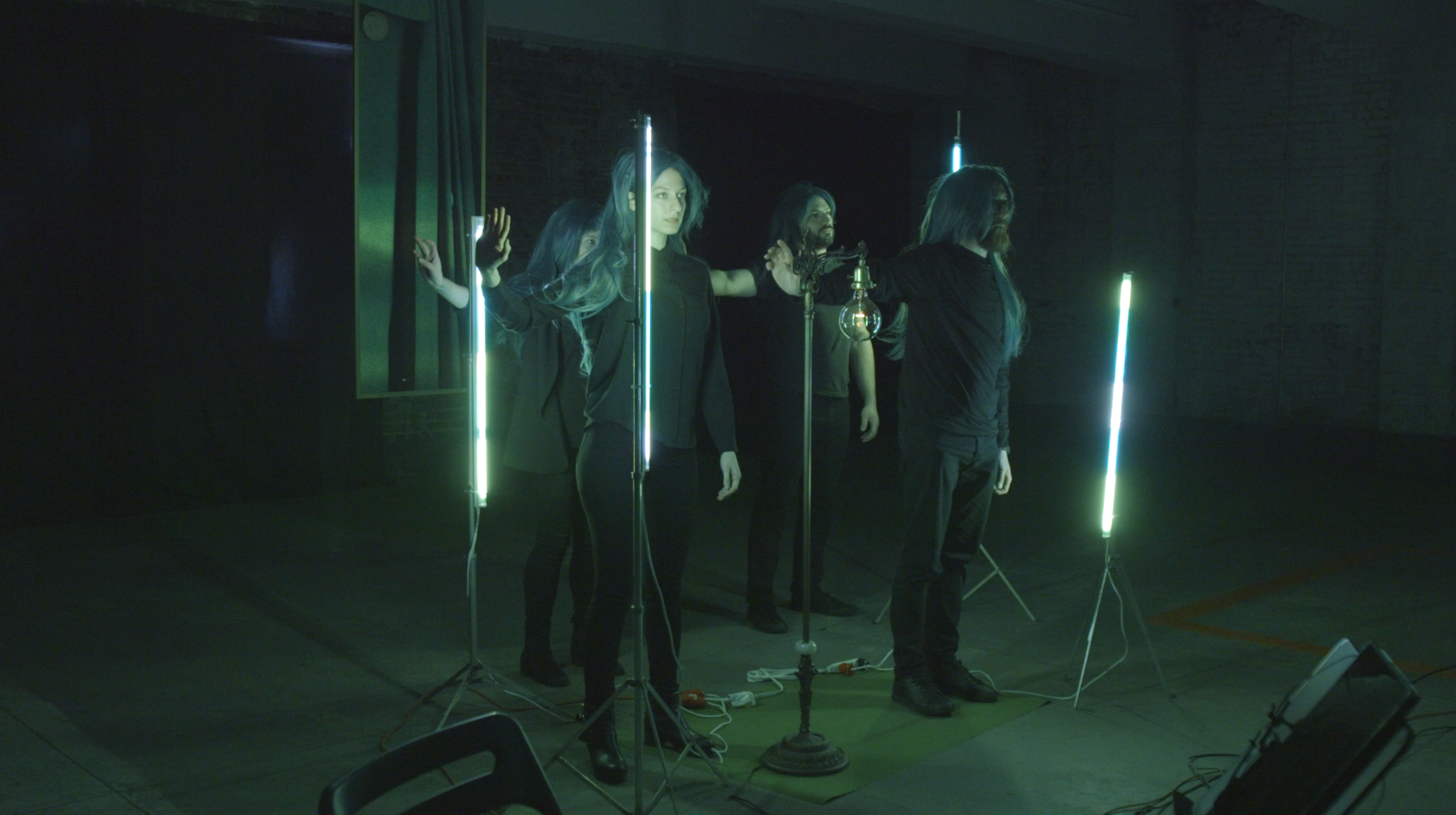
David Bird drop for string octet and strobe lights*
Monika Szpyrka are there hidden figures? for string quartet, electronics and video**
The commissioning of are there hidden figures? by Monika Szpyrka was co-funded by the Ministry of Culture and National Heritage as part of the programme ‘Composing Commissions’ realised by the Institute of Music and Dance.
David Bird is one of the most promising composers from USA and develops a very singular repertoire which includes systemic technologies as a complete part of the writing process. In drop for string quartet and strobe projectors, the question of light defines new ways of perceiving the music field as a new possible counterpoint.
For this concert, we have also commissioned a new piece by Monika Szpyrka, a Kraków-based young composer, who also questions music practices by adding video and electronics.
Sound Installation "Echo Chamber" Opens April 15th
WASHINGTON DC — Echo Chamber is an interactive sound sculpture that encompasses public art, musical composition, and piano performance. It is a collaboration between site-specific artist Mark Reigelman, music composer David Bird, and pianist Ning Yu. Echo Chamber is a musical and visual experience that invites the community to explore, listen, and speak, and challenges the ways in which we experience music and art in both public and private spaces.

WASHINGTON DC — Echo Chamber is an interactive sound sculpture that encompasses public art, musical composition, and piano performance. It is a collaboration between site-specific artist Mark Reigelman, music composer David Bird, and pianist Ning Yu. Echo Chamber is a musical and visual experience that invites the community to explore, listen, and speak, and challenges the ways in which we experience music and art in both public and private spaces.
Extending over 11 feet into the air, Echo Chamber consists of 56 stacked metal tubes creating an enormous facade of resonance and reflectivity. While some of the custom tubes will be hollow chambers, others will be tuned to a unique resonant frequency and contain a multichannel composition by David Bird. The composition utilizes two primary sound materials: prerecorded environmental sounds around GW’s campus and a piano performance by Ning Yu. The spacious harmonies of the composition work to intertwine, complement, and reinforce the acoustic properties of the sculpture.
Funding for this project is provided by the George Washington University Columbian College Facilitating Fund and CCAS Nick-of-Time Impact Microgrants. Special thanks to Corcoran School of the Arts and Design Music Program and Gallery 102.
---
PROGRAMS & EVENTS
- Monday April 15, 2019 // 3:00 pm & 5:00 pm - Join David, Mark, Ning, the Corcoran Music Program, and Gallery 102 for two scheduled performances directly outside of Gallery 102, on the Academic Center lawn near the corner of 22nd and Eye Street. Pianist Ning Yu, in collaboration with David Bird, will perform a site specific score in tandem with the sculpture. To RSVP for the performance, click here.
- Monday April 15, 2019 // 6:00-8:00 pm - Directly following the performance, join all three artists for a talk and light reception inside of Gallery 102. Get a chance to hear more about the inspiration for the project and how it evolved. To RSVP for the talk and reception, click here.
- Wednesday April 17, 2019 // 6:00 pm - If you miss the performance on the 15th, an encore performance of Echo Chamber will be held in Columbian Square inside of the Marvin Center (800 21st Street, NW). To RSVP for the performance, click here.
Honorable Mention 2018 Giga Hertz Prize
Since 2007 the Giga-Hertz Award for electronic music has been jointly awarded by the ZKM | Institute for Music and Acoustics and the Freiburg EXPERIMENTALSTUDIO of the SWR. The Giga-Hertz Award is dedicated to world-famous physicist Heinrich Hertz (1857–1894) who discovered electromagnetic waves at the Karlsruhe Institute of Technology (KIT) where he taught at the end of the nineteenth century.

Giga Hertz Production Award
The jury also nominated two outstanding works from around 150 international submissions: The artist duo »GRAYCODE, jiiiin«, consisting of Jinhee Jung and Taebok Cho, received the Giga Hertz Production Prize worth €4,000 for their audiovisual work »+3x10^8m/s, beyond the light velocity «for Fixed Media. In their piece, »GRAYCODE, jiiiin« make it possible to experience the expansion of the universe through sound. The second Giga Hertz Production Prize, also combined with prize money of 4,000 €, goes to Óscar Escudero for his composition »POV« (Point of View) for saxophone and fixed media. The saxophonist wears VR glasses: he is source and receiver of his actions, through the VR glasses he explores his actions from different »Points of View«.
Special Prize »Artificial Intelligence«
For the first time, an artist is also awarded the special prize »Artificial Intelligence« (endowed with 2,000 €): Martino Sarolli for his play »Lapidario_01«. Sarolli sonifies silicon crystals through the use of neural networks. David Bird also receives a special mention for his composition Decoder for Percussion and Live-Electronics (endowed with 1.000 €). His composition is characterized »by its simplicity with regard to technical means and the mediation of the human-machine relationship«.
https://zkm.de/en/event/2018/11/giga-hertz-award-2018-award-ceremony
Premiere of Music Theatre Work "Lonelyhearts"
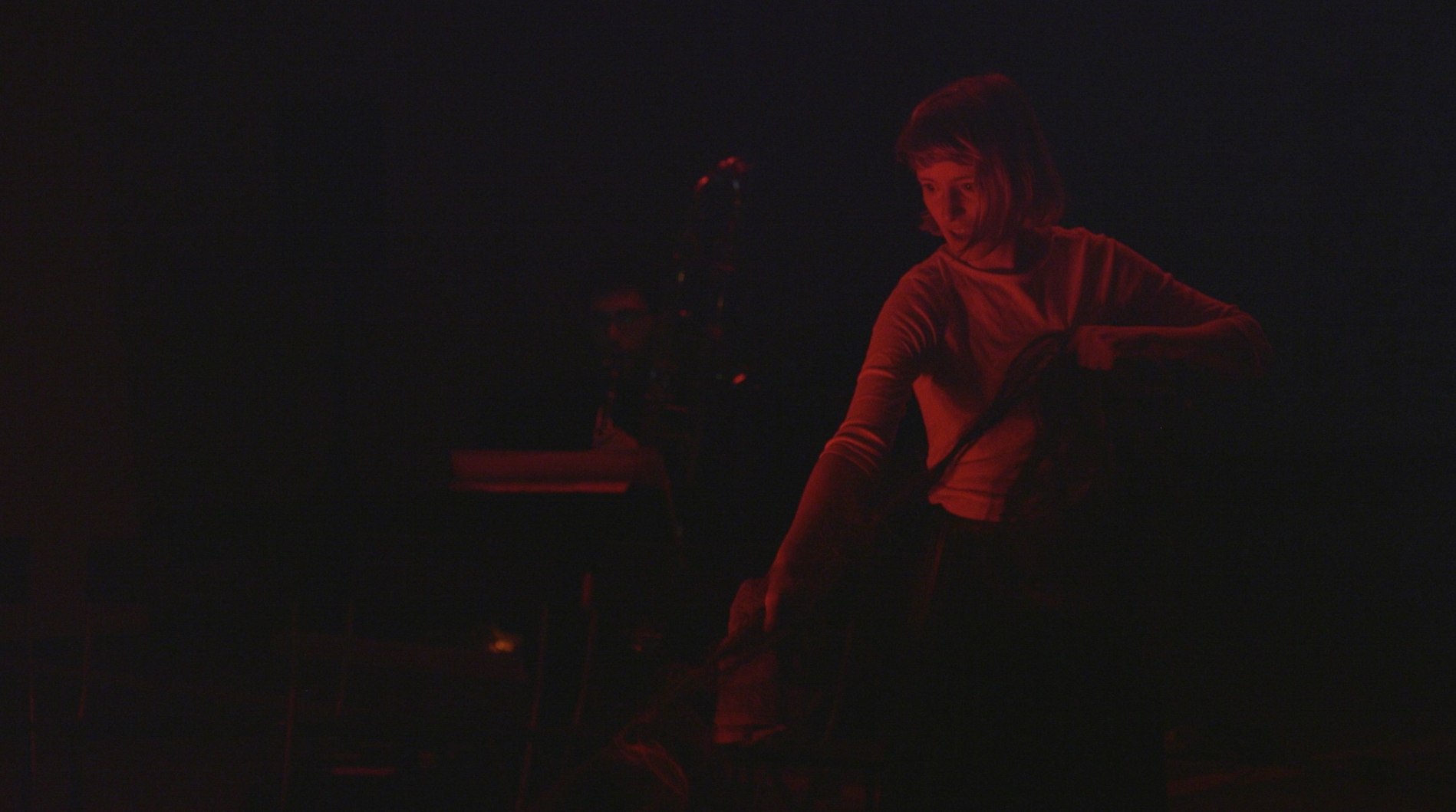
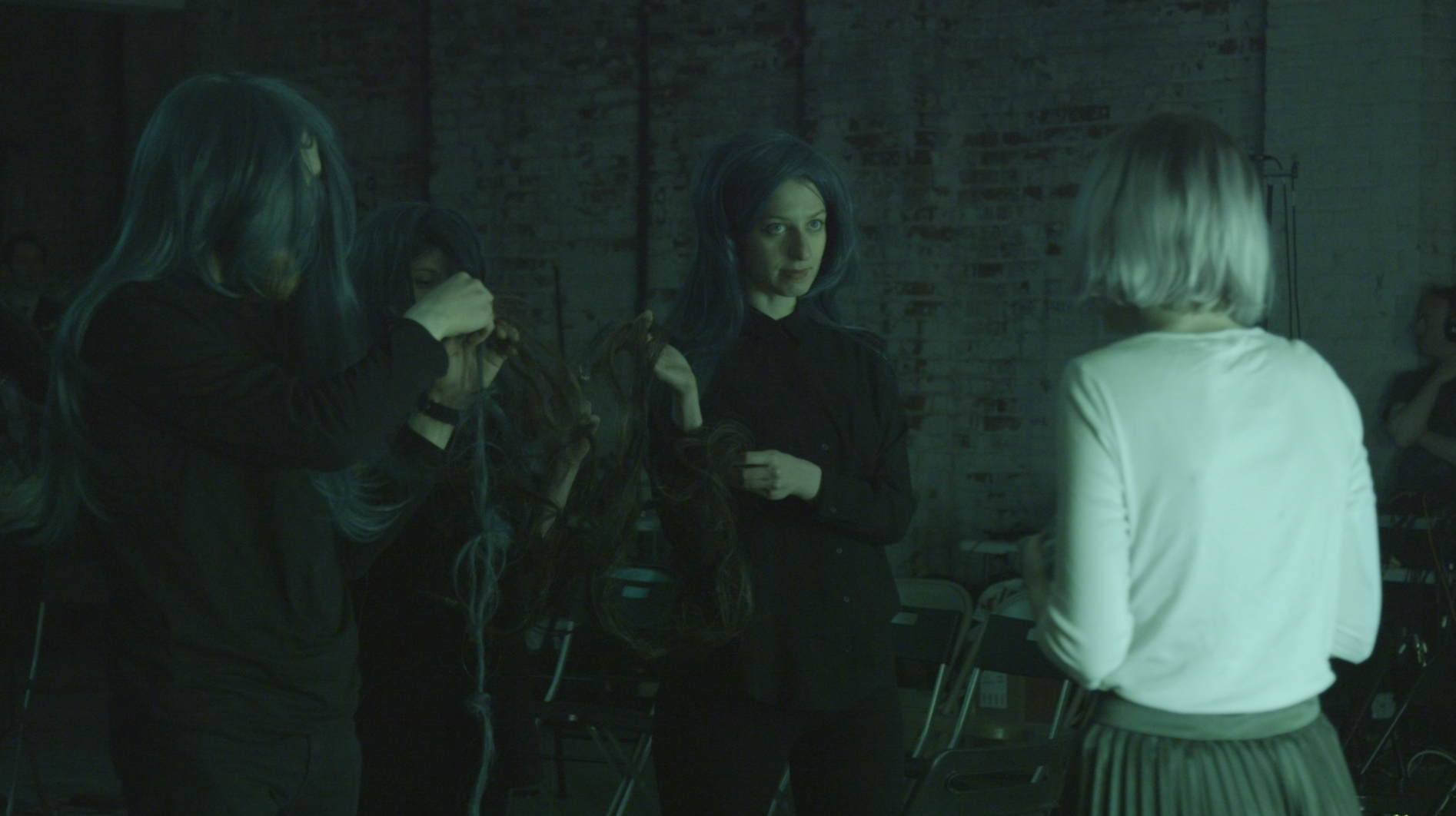
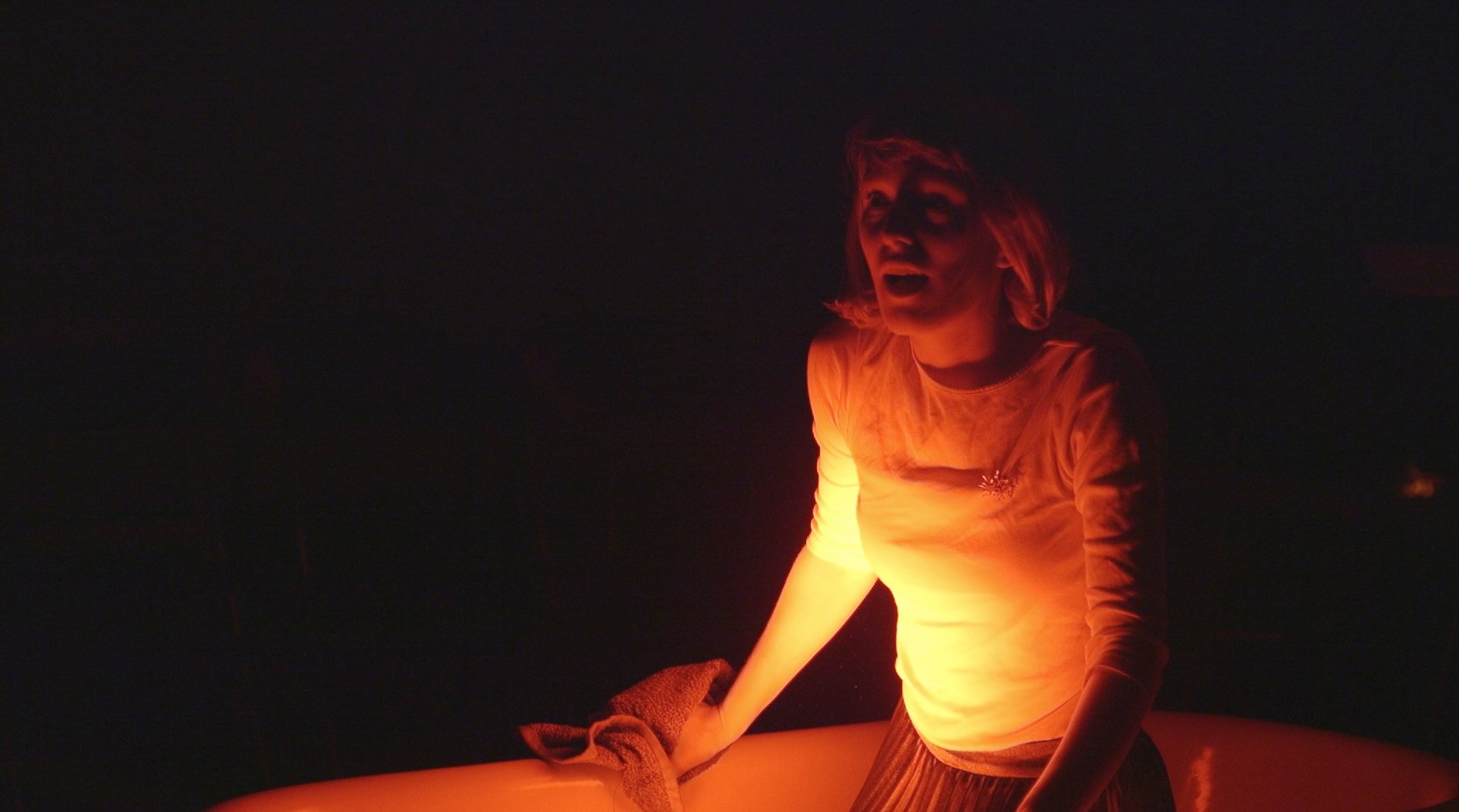
On April 21st, TAK ensemble premiered "Lonelyhearts", developed in collaboration with actor and playwrite Kelsey Torstveit. "Lonelyhearts" follows a single character as they navigate a desolate apartment and the mysteries that hide within it. With nods to Lynch and Hitchcock, commonplace sounds take on a dramatic significance, as creaking floorboards, dripping faucets, and the electric hum of appliances, are amplified and orchestrated out to members of the TAK Ensemble.
On April 21st, TAK ensemble premiered my first-ever music theatre work "Lonelyhearts", developed in close collaboration with actor and playwright Kelsey Torstveit. The evening also featured works by Aaron Einbond and Alec Hall. The three works were directed by Joshua William Gelb and featured lighting design by Marika Kent.
"Lonelyhearts", the work follows a single character as they navigate a desolate apartment and the mysteries that hide within it. With nods to Lynch and Hitchcock, commonplace sounds take on a dramatic significance, as creaking floorboards, dripping faucets, and the electric hum of appliances, are amplified and orchestrated out to members of the TAK Ensemble. In "Lonely Hearts", members of TAK surround the solo performer and the audience, this feature and the staging of the work more broadly aim to construct an 'architectural antagonism' with which the character is forced to contend with and confront. In doing so, the character goes through a dramatic transformation. Do they find their true self in this space? or does the space transform them?